“Adults” Season 2 Review: The Perfect Modern Sitcom
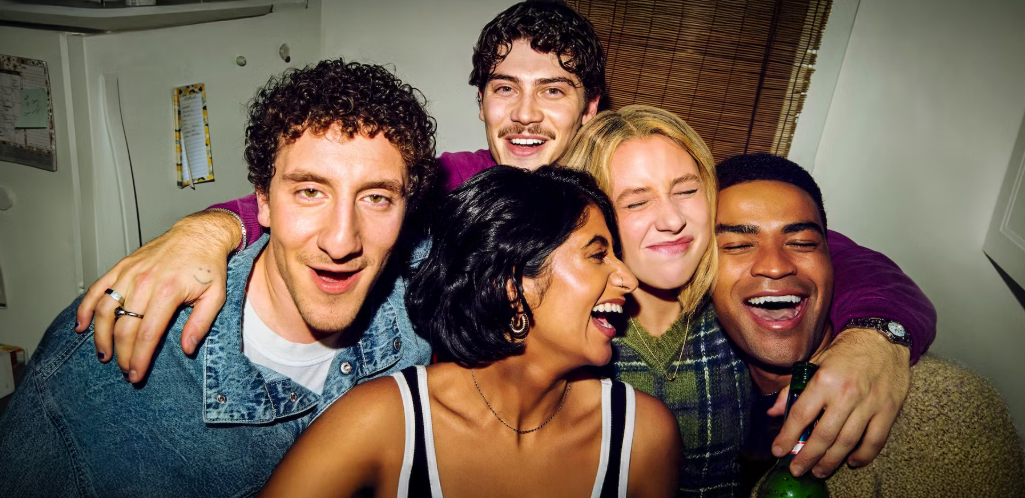
“Adults” (Credit: FX Productions)
If you’re in the age range of 20 to 25, you’ve probably been told by a friend, a co-worker or a sibling that you must watch a show called “Adults.” And maybe your busy schedule doesn’t always accommodate the run time of a long series. Or maybe this person has told you one too many times to watch a show that disappointed you. But this one, they insist, is different, and you have to watch it.
Listen to them. They’re right.
“Adults” is a sitcom created by FX and streaming on Hulu that follows a group of friends in their mid-twenties living in New York. Though the premise may sound familiar (i.e., “Friends,” “Sex and the City,” “Girls”), “Adults” brings the charm of watching imperfect people make their way in the world to a new generation: Gen Z.
Gen Z doesn’t have the luxury of a rent-controlled apartment across the hall from their best friends like Monica Geller. Nor do we have Carrie Bradshaw’s ability to afford the lavish lifestyle of designer shoes and cosmopolitans on a weekly columnist’s salary. Instead, many of us are currently living in our childhood homes, like Samir (Malik Elassal) does in “Adults”. While his parents jet-set across the globe, Samir lives in his family’s house with his childhood friend Billie (Lucy Freyer) and his college friends Issa (Amita Rao) and Anton (Owen Thiele). The series kicks off with the arrival of Issa’s boyfriend Paul Baker (Jack Innanen), who moves into Samir’s house as well.
Paul Baker is almost exclusively referred to by his full name. This is one of many details from the series that reveals how the writers just get it. They understand Gen Z lives and relationships so well that they even included the concept of a first-name-last-name guy (that one guy everyone knows you can’t just call by his first name) in the main cast.
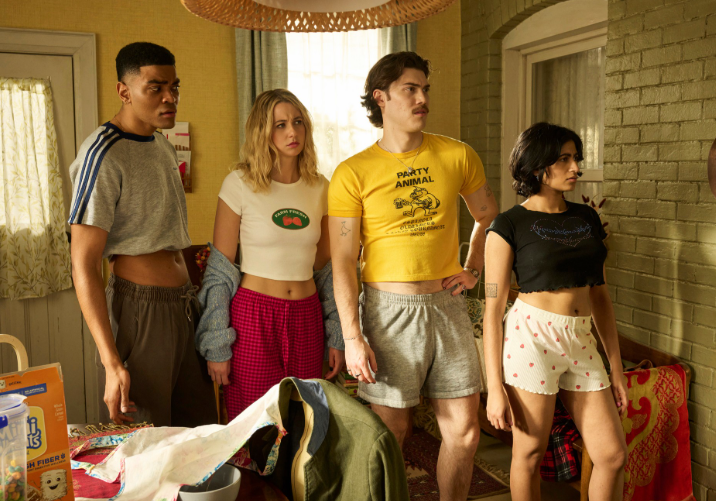
“Adults” (Credit: FX Productions)
In the first episode of season 2, we meet Paul Baker’s other friends, a group of rowdy frat bro types who refer to him simply as “Baker,” and we learn the varying ways he presents to different social circles. When Issa insists that these friends come over to the house for dinner, Paul Baker is afraid to combine the groups for fear of judgment from his new friends. The result is absolutely hilarious as we watch these non-PC guys try to make a good impression on Paul Baker’s more liberal friends. How can you not laugh at the guy unbuttoning his shirt to reveal a tee that says “directed by Greta Gerwig” to Issa?
Unlike many other television shows made for a Gen Z audience, “Adults” doesn’t take itself too seriously. It knows that its jokes aren’t always “woke” but never punches down. That’s what makes the show so genuinely funny. It’s an intellectual humor steeped in layers of cultural awareness: it relies on many aspects of internet culture, but it’s not about the internet.
It would be nearly impossible to make an accurate show about Gen Z without including smartphones. But in a lot of modern media, the use of phones takes the viewer out of the experience. In “Adults,” phones and social media are a tool of connection rather than isolation. There are none of those cringey text bubbles on the screen while a character types on their phone. Instead, Paul Baker tells the others that he has a “man on the street” face and keeps getting stopped by people making short-form video content by interviewing strangers. At first he is annoyed, but he later uses this unusual privilege to help his friend Anton. In the world of “Adults,” social media exists, but instead of diluting the art of the sitcom, it enhances it.
The show also relies on some of the same techniques of social media to make it more appealing to Gen Z viewers. Currently, the show has 17 episodes running 20-30 minutes apiece, making the content easily digestible for the TikTok-and-Instagram-reels-addicted viewer. Moreover, the comedic timing is absolutely impeccable. In the episode “Raccoon,” the group takes acid tabs together, and they set a timer until it kicks in. As they all settle in on the couch to relax and enjoy the euphoric effects, a raccoon walks across the table in front of them. It’s a perfect “oh shit” moment that heightens the viewer’s anxiety and lets them know the 20 minutes ahead of them are going to be chaotic.
The well-timed spike in emotions captures the attention of its audience, and the fabulous plot, characters and dialogue keep it. In season 2 of “Adults,” these elements take center stage. While informed by the political, economic and cultural institutions that shape life in the mid 2020s, the inclusion of relevant topics doesn’t make the story lose focus.
This is what a lot of modern sitcoms — even season 1 of “Adults” — do wrong; they confuse comedy for satire in an attempt to be bold or subversive. While satire is an excellent form of art, if done too often, it comes across as a cacophony of screams from different soapboxes, each voice trying to be the loudest.
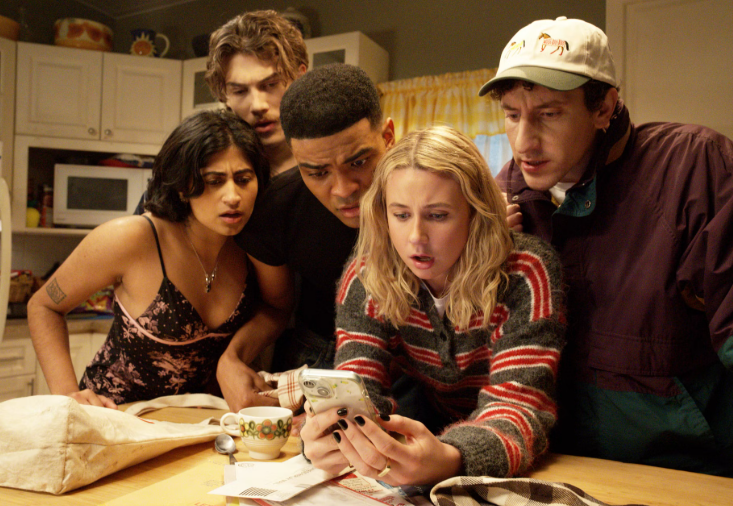
“Adults” (Credit: FX Productions)
Season 1 is a little too on the nose with its critiques of the institutional failures that pervade daily life for 20-somethings. When Billie is rushed to the hospital in the episode “Spitroast,” and Samir acts as her proxy while she’s under anesthesia during an endoscopy, he takes the role a little too seriously. He demands that the doctors immediately perform a colonoscopy that’s supposed to take place in the future because he is worried that her health insurance will run out after her job is terminated. Only later is it revealed that as a contractor, she didn’t have health insurance in the first place, and she’s hit with a massive burden of a bill. This storyline is a pretty obvious critique of the American healthcare system.
Similarly, the plot of the episode “Annabelle,” where Issa takes in a pregnant teenager for the weekend who is traveling from out of state to receive an abortion in New York, sends a clear message about the reality of living in a post Roe v. Wade America.
However, Gen Z is not an audience that needs to wake up and see what’s wrong with the world. They are very aware. There’s a reason Gen Z is called “the anxious generation.” The information overload available every day keeps them thinking in the big picture, sometimes overshadowing the little relational parts of life that are so important— the hard conversations, the risky choices, the moments of shared grief, joy, pride, anger and everything in between.
We need to see people living, laughing and loving. We need to see friendships, breakups, hookups, work drama, roommate dynamics — proof that the noise of the tumultuous world doesn’t deafen the relationships that make us human.
Season 2 of “Adults” gives us that proof. It’s the comfort show that we so desperately needed, and more importantly, a healthy reminder that everything is going to be okay.