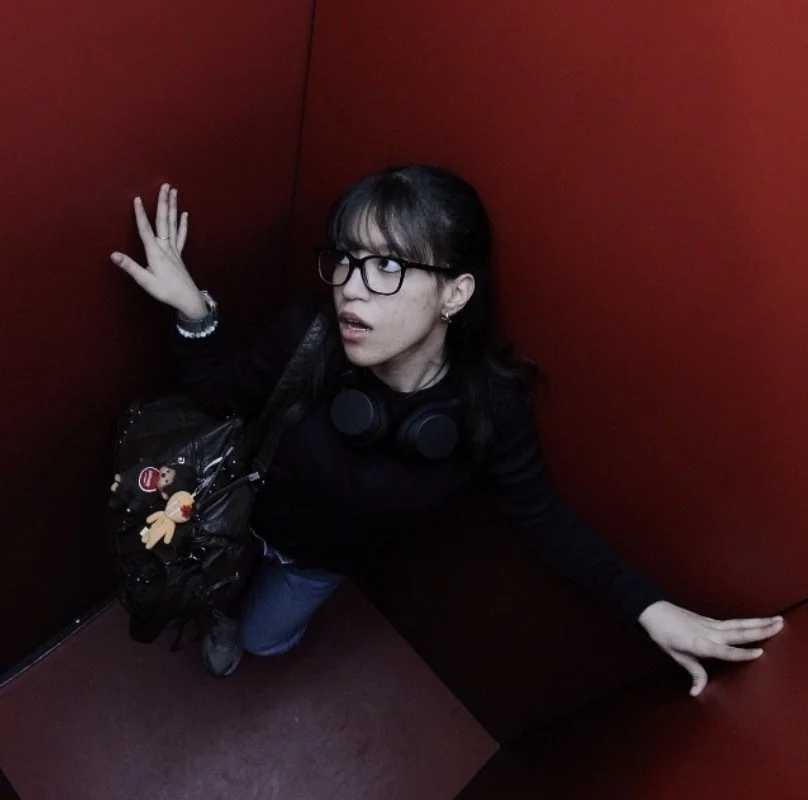
A Day in my Mind, a ‘Night in the Woods’: An Homage to the Video Game that Saved Me from Myself
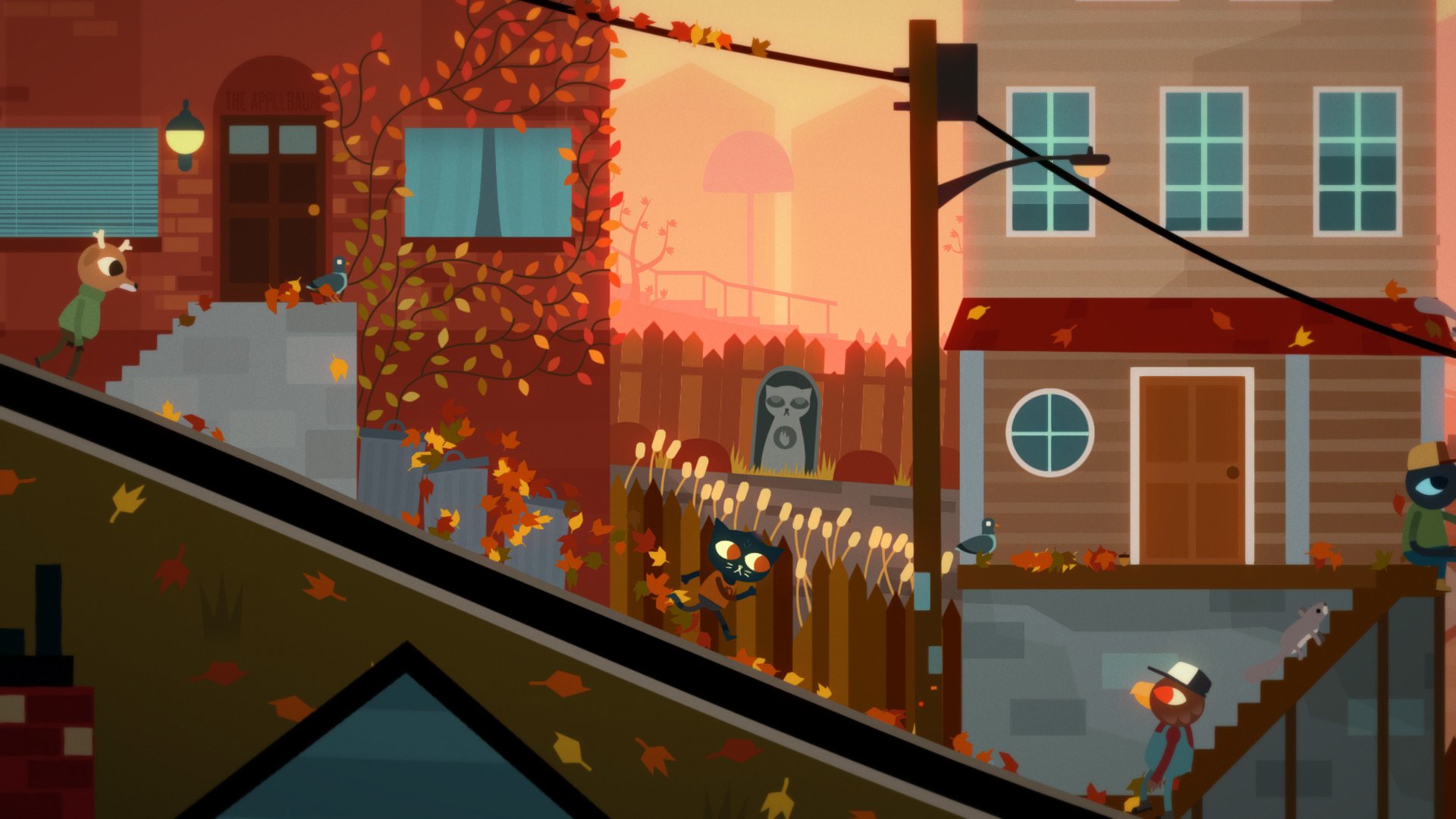
A Night in the Woods (Credit: Infinite Fall/Finji, 2017)
Many young people fear the future. We often fear abrupt or substantial change to the habits and systems we have grown accustomed to – because what we consider comfortable is something manageable, tangible. There’s a reason 5-year planners exist, isn’t there?
To have a set goal, a ‘purpose’ in life… these are the wishes of those who want to leave a mark – an impact in the world. We admire and praise those who seem to lack fear of the future, those who have set long-term goals and put plans in place to achieve them.
But what if it doesn’t go according to plan? What if the goals you once set for yourself suddenly change, or even disappear entirely? How will you adapt in a world that seems unforgiving for those with no backup plan? What will you do at the end of everything? These are the questions that the critically acclaimed indie video game Night in the Woods dares to ask its players.
Night in the Woods: What’s its Deal?
Created by the independent development team Infinite Fall, established by Scott Benson, Alec Holowka and Bethany Hockenberry. Night in the Woods is a narrative adventure (and slight platformer) game set in a small, dilapidated town named Possum Springs. You, the player, follow the story of Margaret “Mae” Borowski, an anthropomorphic feline and 20-year-old college dropout who returns to her hometown and only to find out that change isn’t just limited to the seasons but also to her town, relationships and herself.
Mae suffers from a dissociative personality disorder that has left the townsfolk back home wary of her presence after an episode she had six years prior to the game’s events. Still, she returns home to Possum Springs with the hope that being somewhere familiar, somewhere comfortable, may help her regain a sense of normalcy. However, things are far from normal in this small town. Possums Springs’ coal mines have shut down, and the town is no longer being cared for as it once was. Life is no longer as Mae used to know it. Now, the town she once found solace in is different. Everything that was once safe and normal to her is now eerie and strange, and Mae recruits those whom she trusts and who understand her in her desperate search to figure out the reason behind the sudden changes around her.
Mae’s friends consist of Beatrice “Bea” Santello: a melancholic but witty and intelligent crocodile and childhood best friend of Mae; rambunctious, delinquent fox Greggory “Gregg” Lee; and his hilariously opposite, quiet and sensible bear boyfriend Angus Delaney, who are all quite unordinary (in a good way, of course). Shortly after her return to Possum Springs, Mae and her friends meet up to discuss the sudden and mysterious disappearance of one of their friends, Casey Hartley. With Casey’s disappearance, the small town no longer feels like home; Mae’s alleged sanctuary is now altered by the disappearance of a good friend. As the game progresses, Mae (and in turn, the player) uncovers a terrible secret about Possum Springs, one that was hidden from the public eye and that was suspiciously connected not just to the closure of the mines, but also to Casey’s disappearance. In tandem with the town’s secret being revealed, Mae’s understanding of herself and her friendships are – much like the inherent mystery – beginning to unravel. The ‘normalcy’ that she once yearned for is now a fleeting concept that she can’t seem to get a hold of.
All things must come to an end. Everything about everything will change, whether you like it or not. It’s a fear that only grows stronger with age, and being in my mid-20s, there is no one to understand Mae’s fear better than myself. In fact, I think it’s safe to say many of us experience this fear on a daily basis. Night in the Woods reminds the player that you are not alone in fearing change, in fearing the unknown. There are others like you who worry about these seemingly ‘trivial’ things. What matters most, as the game’s tagline suggests, is what you hold onto at the end of everything– which, I believe, is human connection.
What Are You Doing Tonight?
One of the most important (and my personal favorite) aspects of Night in the Woods is its focus on the intricacies of friendships and relationships. Considering the game is lightly decision-based, what you say, and more importantly, who you decide to hang out with matters. Benson, in an interview with Jeffrey Matulef of EuroGamer, states, “There’s not going to be a ‘nuke the town or save the town’ [decision], it’s more like ‘do you hang out with this person?’ Okay, cool. That person might not know you as well by the end of the game, but this person you hung out with, you’re going to get to see their storyline.” Most nights, you must decide between hanging out with Bea or Gregg after band practice – the first person you choose immediately locks out the other’s storyline and leaves certain aspects about their lives undiscovered. This sort of mechanic resembles that of real life. Despite how many friends you have, you cannot be best friends with everyone, and you won’t ever know everything about your best friend. It is impossible to appease every single friend or person you know, and that is okay. Night in the Woods reminds you that despite not knowing all of your friends rather intimately, the fact that you have these connections at all is something wonderful. Human connection helps us survive in a world that no longer empathizes with those who fall behind and simply moves on, with or without us.
On that note, time is a prominent theme, as there is only so much time before the seasons change and once large events of life become memories. You cannot complete every objective in one playthrough – trust me, I’ve tried – which I believe makes for a great cliffhanger, of sorts. Though the story comes to a formal end, the player will still be left wondering how it would’ve played out if you chose a different friend to get close to. It’s a great way to get players to replay the game and play different storylines to experience different perspectives, which, in my opinion, is where the beauty of Night in the Woods exposes itself in a full-story run of the game.
Shall we Stop and Smell the Roses?
As Davis Cox of Wayback Magazine states in his article on the game: “post-teen malaise, the loss of home and watching friends turn into people you don’t know: this is not typical fare for the video game world, to be sure.” This is Night in the Woods specialty, taking everyday issues and placing them in realities we may not believe they could occur in normally because of their seemingly unrealistic elements. Benson, Holowka, and Hockenberry create a space in which the most important aspects of the game aren’t necessarily gameplay-centered, but narrative-focused, in which Benson describes the game’s core actions as primarily “observational” and “internal,” i.e., exploring, conversing with other locals and friends, seeing the world around you, and interacting with it via touch. It’s another favorite aspect of the game for me, for sure. Some days are busier than others, with the player wandering around town trying to solve puzzles or progress in the story, while other days involve repeatedly playing the electric guitar at band practice, failing miserably at Mae’s computer game, or even stargazing. For some, this gameplay may seem dull, to which I say: Explore! Converse! Interact! Broaden your gaming horizons! So much of Night in the Woods’ charm comes from the beauty in the mundane. The game itself is a reminder that though life can sometimes be a little boring, being alive is a great privilege, and life is anything but a bore. Cherish the mundane while you still have a moment to take it all in. These ideas are all quite foreign to (at least) my generation; we are expected to uphold and follow a certain work/life standard previous generations embraced, and that mindset is oftentimes unsuccessful. I enjoy that Night in the Woods reminds me to take a breather in a world so work-oriented and fast-paced.
The Epic Highs and Lows of your Twenties
As someone who has been in their twenties for about five years now, I have to say Night in the Woods hits the nail on the head when it comes to discussing just how awkward, insanely terrifying and overall difficult being in this transitional period of one's life is. There is much to consider: you’re not really a kid anymore, but are you ‘adult’ enough? To what extent are you allowed to be obnoxious and free without being considered immature? When does the fear of growing up go away? All of these questions float around in Mae’s mind, while also creating a home in mine.
When I first played Night in the Woods in my sophomore year of college, I remember the story moving me to tears. That feeling of loss, helplessness and self-doubt felt familiar to me, as certain aspects of my life did not seem concrete despite me wanting to feel secure in my future. Playing through Mae’s story reminded me that I am not the only one who feels lost, and that there are many like me who also have no clue where they will end up next. Even my own friends, who I once believed had everything figured out to the finest detail, were unsure. They too faced this fear alongside me. In the moments I felt like the world would come crashing down on me, my friends and family helped support me through any hardships that came my way. I came to realize that connection, love – whether romantic, familial or platonic – really does prevail in the best of times, but also during the worst of times. During these rough patches, I thought of one of my favorite quotes from the game, spoken by Angus: “I believe in a universe that doesn’t care, and people who do.” Though I felt isolated, there was always a beacon of support in at least one other person, and to me, that was more than enough.
Night in the Woods reaffirms the importance of connection through these relatable, ironically human-like conversations (despite all of the characters being animals). Perhaps one’s ‘purpose’ doesn’t come from just one material thing or hobby, but from the love we put out into the world. Even if we may not do something that may leave behind a physical mark on the world, it’s “pretty amazing to be something, at least.”
References
http://killscreendaily.com/articles/charming-melancholy-night-woods-picks-where-gone-home-left/
https://www.eurogamer.net/games-they-are-achangin-a-look-at-nostalgic-adventure-night-in-the-woods
Infinite Fall. (2017). Night in the Woods [Windows, macOS, Linux, PlayStation 4, PlayStation 5, Xbox One, Nintendo Switch, and iOS]. Finji. https://store.steampowered.com/app/481510/Night_in_the_Woods/