‘One Night Only’ Review: Rom-Com Misses the Mark with Sex-Negativity
It’s no secret that romcoms have largely vanished from the limelight, but there’s been a recent resurgence that's hard to ignore. With “People We Meet on Vacation” and “Voicemails for Isabelle”, romance in 2026 is so back– but according to “One Night Only”, sexual freedom isn’t.
What is “One Night Only” about?
Directed by Will Gluck, the film follows a dystopian United States where premarital sex is made illegal to lower STD transmission and teen pregnancy. With monitors surveilling citizens, unmarried individuals are only permitted to have sex one night a year, like “The Purge”... but with sex. It’s oddly comical at times, but largely a horrifying reflection of the social climate and conservative views of intimacy and control in the US.
Owen (Callum Turner) is a recently single pizza shop owner looking for a one-night stand, while Allie (Monica Barbaro) is an aspiring singer looking for her soulmate in a sea of sex-deprived singles. In true romcom spirit, they keep running into each other, and eventually fall in love.
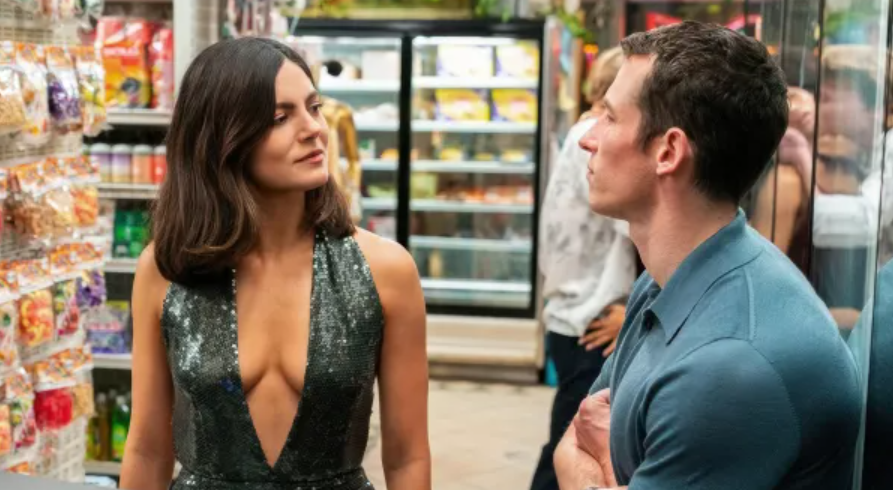
One Night Only (2026). Universal Pictures
Better to have loved and been arrested… than never to have loved at all?
If this was a movie about two singles finding love in a state of surveillance and a lack of privacy, I would have better things to say. Unfortunately, the movie instead reads as one that would be used to promote traditional values of sex and relationships to younger generations. It’s hard to walk away feeling like it's anything but a twisted sex-ed lesson to convince the audience that abstinence is the best policy after all.
When the film begins, we’re immersed in an alternate NYC with signage stating sex is illegal and advertisements targeting the unmarried demographic. In this world, you can walk past street signs protesting the sex mandate and turn a corner to see condoms being sold for hundreds of dollars. We see public disapproval of the mandate and capitalistic gain hand-in-hand, which sets up the world as a dystopia with the potential to have a positive message by the end credits.
Allie and Owen themselves don’t seem to exactly love the law, but they abide by it nonetheless. Otherwise, they’d find themselves behind bars. While it’s reasonable to want to avoid jail time, the movie framing sex as a serious crime with serious consequences is quite concerning. What’s even more concerning is that the one person who actively defies the mandate by having sex year-round – a man Allie meets at the bar – is chased down, tackled and handcuffed. Having this one protester fail raises the question– what message is the movie trying to send?
It seems to be that protesting a breach in your privacy is useless and that conforming to the government’s surveillance is for the best. It suggests some freedom is better than none at all. If you operate within that bubble, you have nothing to worry about.
At the end of the day, Allie and Owen do stay in that bubble. In fact, they willingly put themselves in it. After falling for each other, they still have time left in the 12-hour window, but decide not to have sex after all. Apparently they’ve learned that real love is possible, and who needs sexual freedom when you’ve found the one? They agree to date first and submit to a period of abstinence to focus on their emotional connection. While the message that real love is out there is present in the movie, it's hard to focus on their love while watching the government control their bodies and take away their privacy.
Hollywood Persuasion
Truly, the amount of stars in this film made my stomach churn. It’s hard to believe anyone read this script all the way through and decided it was a good one to be a part of. Alas, we somehow got Maya Hawke, Julia Fox, Glenn Powell, Sydney Sweeney, Ben Marshall, Pete Davidson, Charlie Gillespie, Nicolas Braun, Bobby Cannavale, and many more to make cameos throughout the movie. It felt like a new celebrity was popping up every 10 minutes, as if it hoped the star power would catch more attention and bring in more audiences to be persuaded that traditional values of sex and marriage are the way to go. It shouts from the rooftops, “if they can avoid premarital sex, then so can you. Be like them!”
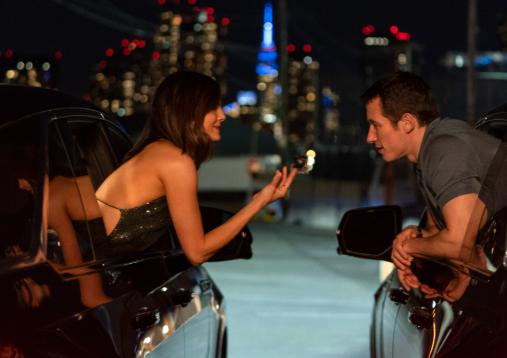
One Night Only (2026) Universal Pictures
Societal Shifts in Values
In an interview with Variety, director Will Gluck discussed shifting perceptions of sex. “Whenever people now see nudity or very adult situations in a big theater, they get uncomfortable.” The New York Times covered what they call the current “sex recession”, which feeds into Gluck’s point. However, while he notes the discomfort in watching nudity on screen, there seems to be more to this discomfort.
In a recent interview, researcher Carmen Sherman noted that “after the overturning of Roe v. Wade, there was a study that came out which found that about 13 percent of millennials and Gen Z have become more anxious around sex.” This is the issue that lingers with “One Night Only” using a sex ban to prevent pregnancies in youth and banning premarital unprotected sex altogether. While it tries to come across as positive, it feels deeply rooted in pro-life ideologies by encouraging abstinence as the best form of birth control.
Taking away sexual freedom may be the answer in “One Night Only”, but this is an extremely dangerous way of thinking in our real world, especially as we’re already starting to see abortion bans take place. Sexual health is something young generations should feel comfortable discussing, and no one should be villainized for this natural part of life. My fear is that this movie feeds into government scare tactics surrounding sex, and ultimately feels like a reality that could be a stone’s throw away.
Sherman goes on to discuss sexual violence against women, saying young women walk around in fear, both of assaults and the fact that “institutions are not necessarily set up to help them in that instance.” Of course, in the world of “One Night Only”, sexual assault is not discussed, but it’s safe to say the system is not set up to help those women either. In a movie all about sex, or the lack thereof, it strikes me as odd that consent is never discussed at all. In a movie targeted towards a younger demographic, this is yet another problem and missed opportunity to do something positive with the story.
Other 2026 Rom-Coms
While “One Night Only” didn’t leave me feeling swept off my feet, I still feel strongly that rom-coms are making their way back. Here’s to hoping this is a one-off fluke.
If you’re looking for something more along the lines of a traditional rom-com, “Voicemails for Isabelle” is one that tackles turbulence, grief, and finding love in a way that’s beautiful and cry-worthy. Starring Zoe Deutch and Nick Robinson, the movie will have all the feel-good energy you’re looking for, streaming on Netflix.
It also doesn’t have a bunch of covers of songs turned into commercial jingles, which is a plus.
Final Verdict
Many people think rom-coms have no value or influence, but the truth is they’re a great reflection on the current dating scene. Romance movies from the 90’s display different norms than 2010’s classics, and now this new wave has its own spin on love. It’s important that these films reflect the time while not feeding into negative messaging or pushing an agenda that could be harmful. “One Night Only” had so much potential to frame sexual freedom as a positive thing, and it missed the mark entirely. As romance is traditionally geared towards women, it’s an even harder pill to swallow as women already face so much scrutiny on the topic in the real world. My hope is that we still have more rom-coms in store for the year, and that they’re much more empowering, progressive, and conscious of the modern day dating scene.
